
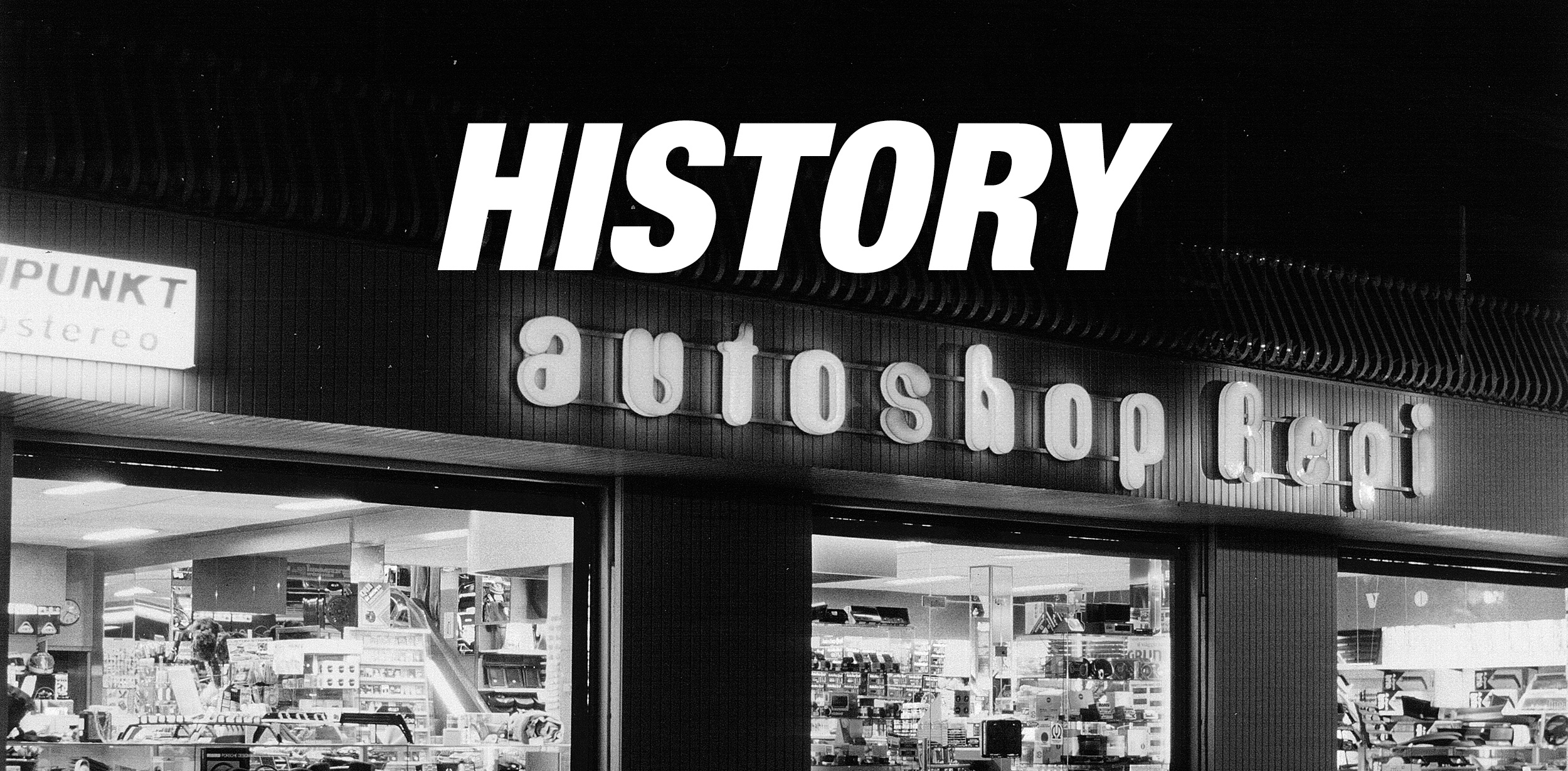
Our History
The TRIO Group was founded thanks to the intuition, passion, and great energy of Ferruccio Battaglia in the early 1960s. It all began in the automotive sector, distributing spare parts and accessories for cars and motorcycles. From there, TRIO expanded its scope, entering the B2B world, developing digital commerce solutions, and offering tailor-made logistics and order management services to meet customer needs.
Growth never stopped: today, the company integrates e-commerce strategies, advanced marketing tools, innovative technologies, a dedicated research and development division, and specialized professionals across departments to deliver increasingly efficient and competitive solutions to its clients.
From its determined first steps to the steady growth that made it a benchmark in the industry, TRIO has always had a clear goal: to create value for its customers by offering not only products and services but also an experience based on trust and attention to detail.
Over time, the team has grown, technologies have evolved, and markets have changed. But one thing has never changed: the passion that drives every choice, every innovation, every new achievement.
Today, TRIO is more than a company. It is a reality where people, expertise, and vision come together to anticipate the needs of a constantly changing world. It is proof that believing in an idea and nurturing it with commitment can take you far.
If the past has been a story of growth, the future is a promise of continuous evolution — with the same spirit, the same energy, and the same enthusiasm as the very first day. Because success is never a destination, but a journey to be lived with passion.
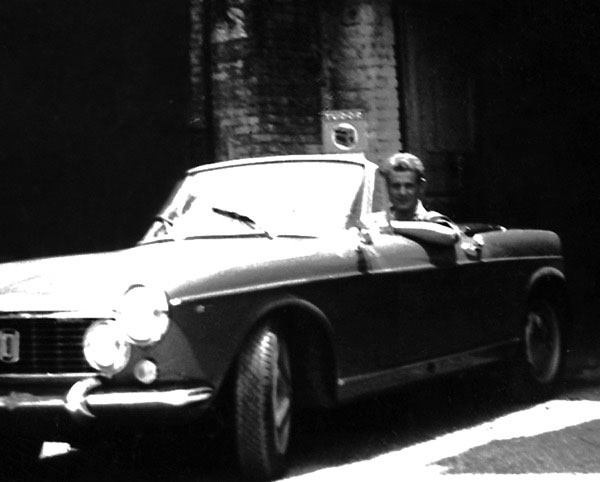
1968
It all began with a small workshop in the heart of Montebelluna, a town in the province of Treviso, specialising in the repair of automotive electrical components.
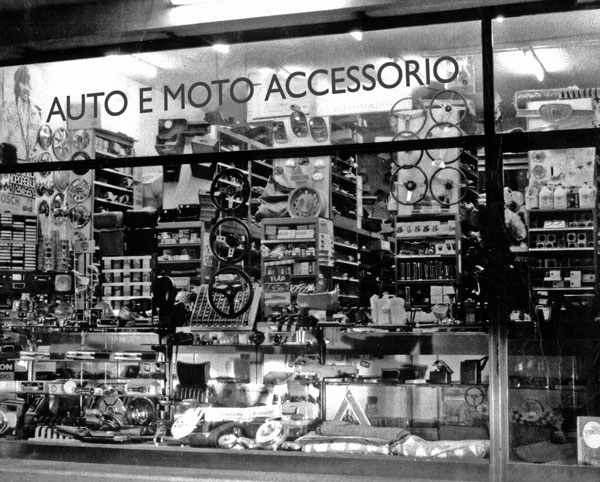
1970
Driven by Bepi’s entrepreneurial vision and the desire to introduce an innovative self-service model for car parts and accessories, the first specialised retail store was opened in Montebelluna. Initially dedicated solely to the automotive world, it expanded in 1985 to include the motorcycle sector.
Named “Autoshop Bepi,” the store marked the beginning of a pioneering commercial project unlike anything previously seen.
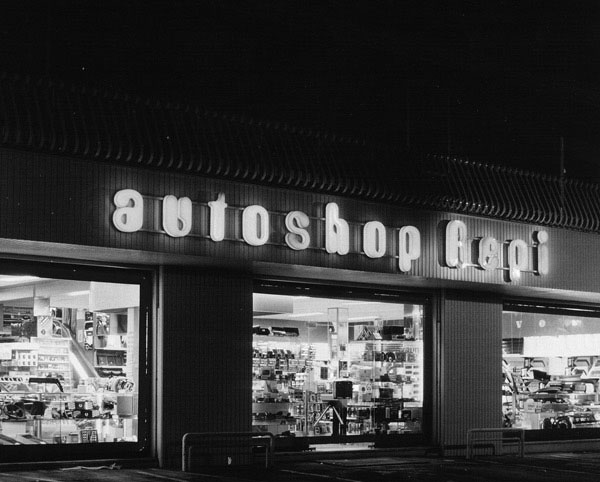
1980-1990
As the company evolved and customer needs changed, the store underwent a major renewal, refining its internal division into specialised departments, including areas dedicated to motorcycles, rally cars, and karting.
1990
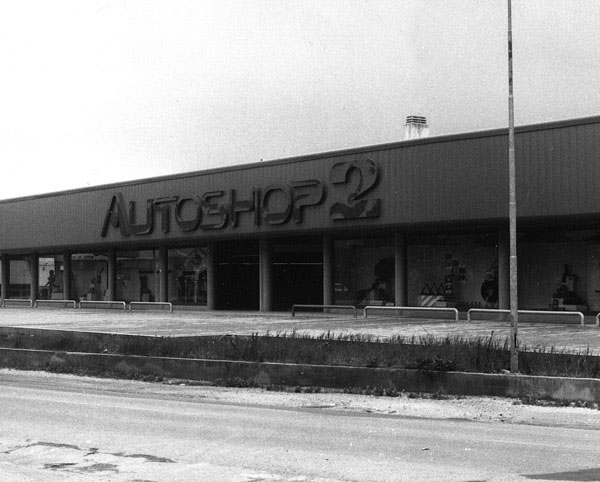
In response to growing demand and the success of the first location, “Autoshop 2” opened: a superstore with over 15,000 items across 2,000 m², becoming the largest megastore for car and motorcycle accessories in Italy.

1995
The first Italian mail-order catalogue for car and motorcycle accessories, titled “SPEED UP,” was published. With 200 pages and 3,000 items, it quickly became a must-have reference for motor enthusiasts.
1996
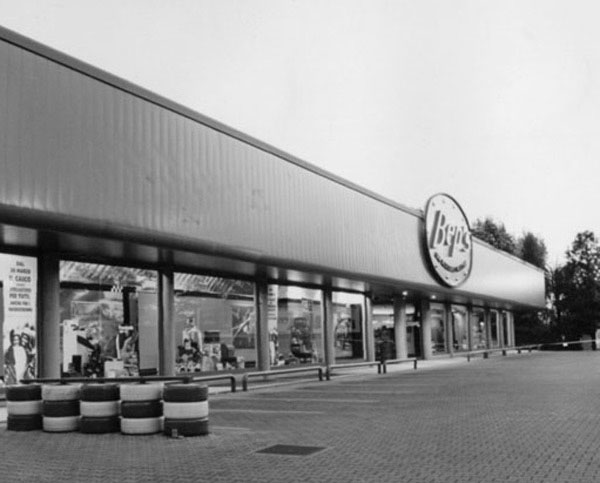
To meet market needs and support a new territorial expansion plan, the store was renovated and rebranded as “Bep’s.” The new name, inspired by the founder, was paired with a logo designed to resemble an automotive emblem.
1997
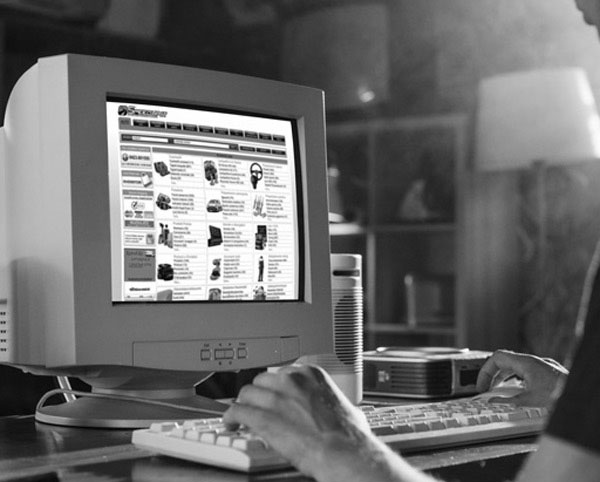
To expand nationwide and reach customers beyond the physical store, the online sales site “Speed Up” was launched, increasing product availability and accessibility.
1998
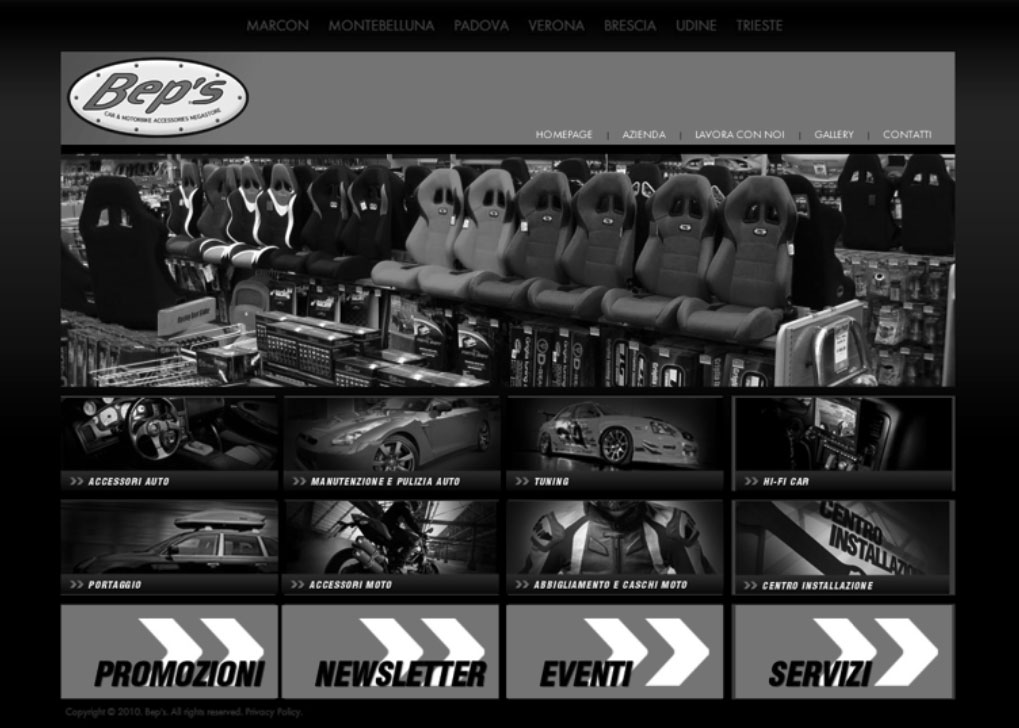
Bep’s officially entered e-commerce by launching an ambitious online sales project. The goal was to extend the company’s presence beyond physical stores and reach customers across Italy directly, quickly, and easily.
1999
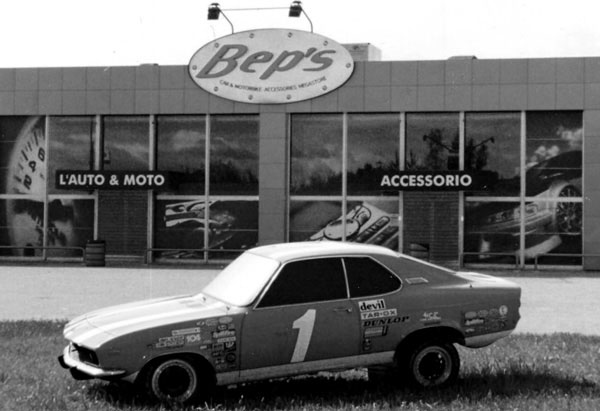
The expansion of Bep’s megastores began with the opening of the second location in Udine. This milestone marked the brand’s first step beyond its original headquarters and solidified its success, paving the way for future openings across a wider territory.
2007
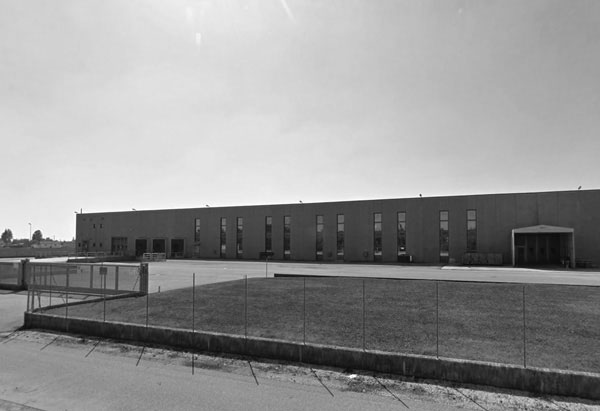
The first 7,000 m² warehouse dedicated to logistics and distribution for Bep’s stores was opened. Designed to manage imported products, it improved availability and operational efficiency across all locations.
2009
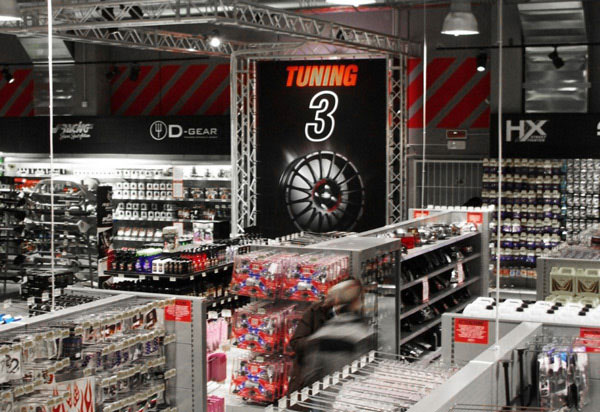
Stores were redesigned with the support of a team of retail-specialised architects. Bep’s introduced an optimised format featuring a renewed interior and exterior layout to enhance brand identity and attract customers. This development project strengthened brand visibility and the overall shopping experience.
2011
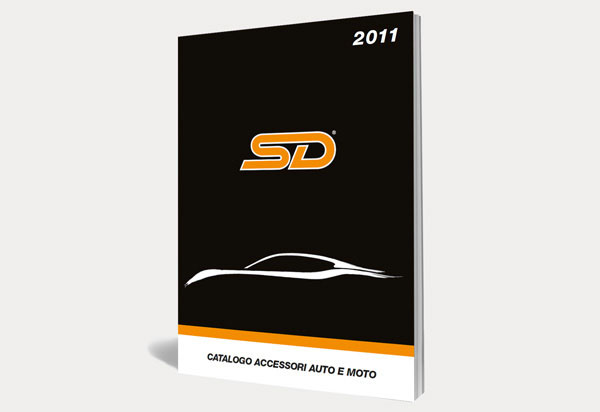
SD DISTRIBUZIONE became the first Italian B2B mail-order catalogue dedicated to car and motorcycle accessories. Designed for industry professionals—small shops, body shops, dealerships, workshops, and mechanics—it offered the ability to manage thousands of imported and domestic products through a single supplier, first via print catalogue and later through an online platform.
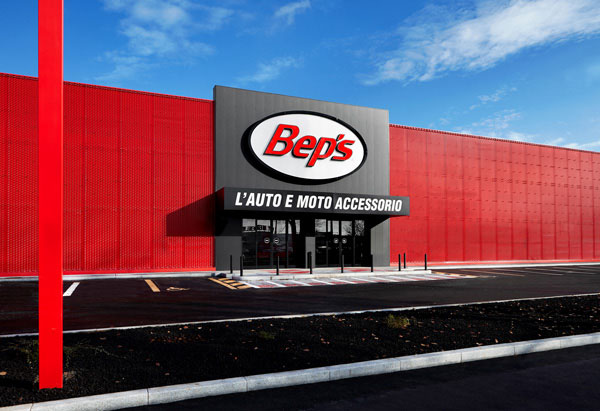
2013
Bep’s refreshed its visual identity by launching a new logo that reflected a strategic evolution and a future-oriented vision. The redesign balanced continuity and innovation, maintaining recognisable elements while adopting a more modern, streamlined, and dynamic look. Real estate development continues in strategic regions.
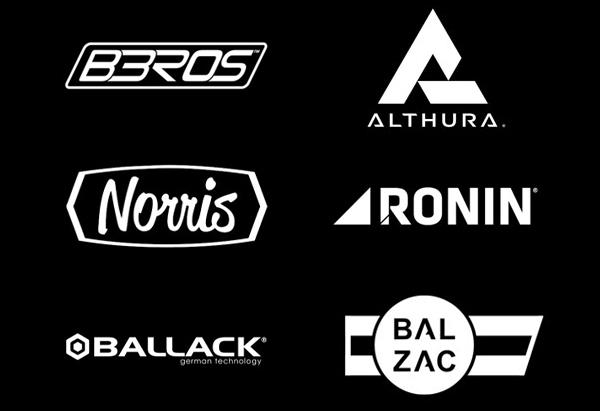
2016
The acquisition of exclusive partner brands in key strategic sectors continues.
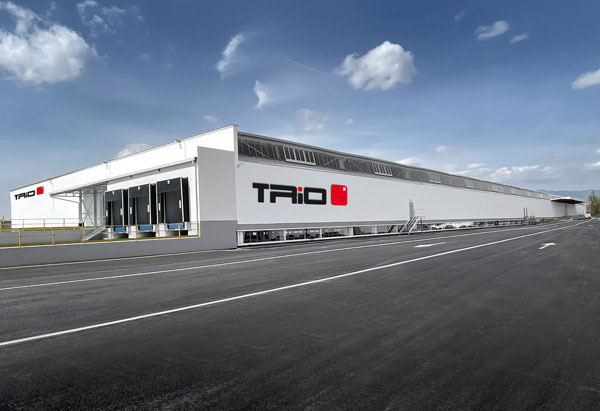
2021
The company relocated and opened its new 38,000 m² logistics hub, designed to support business growth and enhance operational efficiency. This strategic facility strengthened the entire retail network and improved service levels. The new structure now manages over 97,000 SKUs.
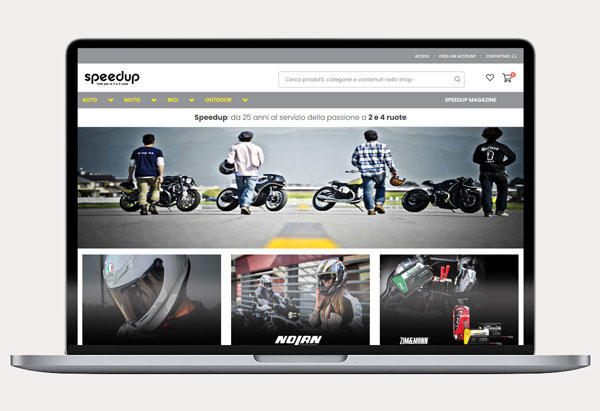
2022
The Speed Up e-commerce platform underwent a major redesign, accompanied by a new logo. As part of its digital evolution, Speed Up enhanced the online shopping experience, improved navigation, and ensured optimal performance across all devices. The new platform provides faster access to an even broader product catalogue.
2025
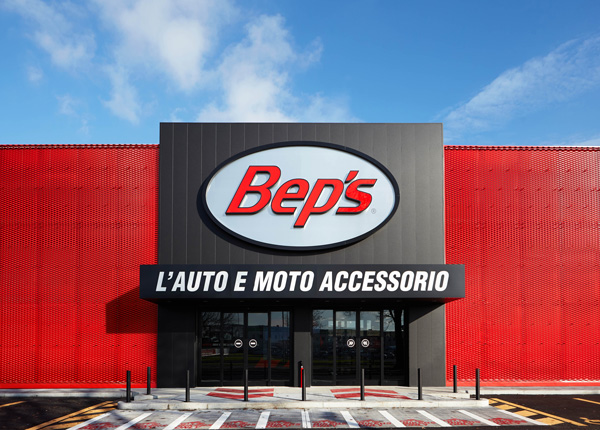
By the end of 2025, the Bep’s retail network will reach 40 stores across Italy, spanning 9 regions. Expansion continues with new openings already planned, with the goal of achieving full national presence and establishing stores in every region.
2026…
The group’s expansion plan continues with new store openings and the ongoing acquisition of exclusive brands. Its presence is becoming increasingly established, widespread, and consistent across the territory, with strategically distributed locations designed to ensure easy access everywhere.